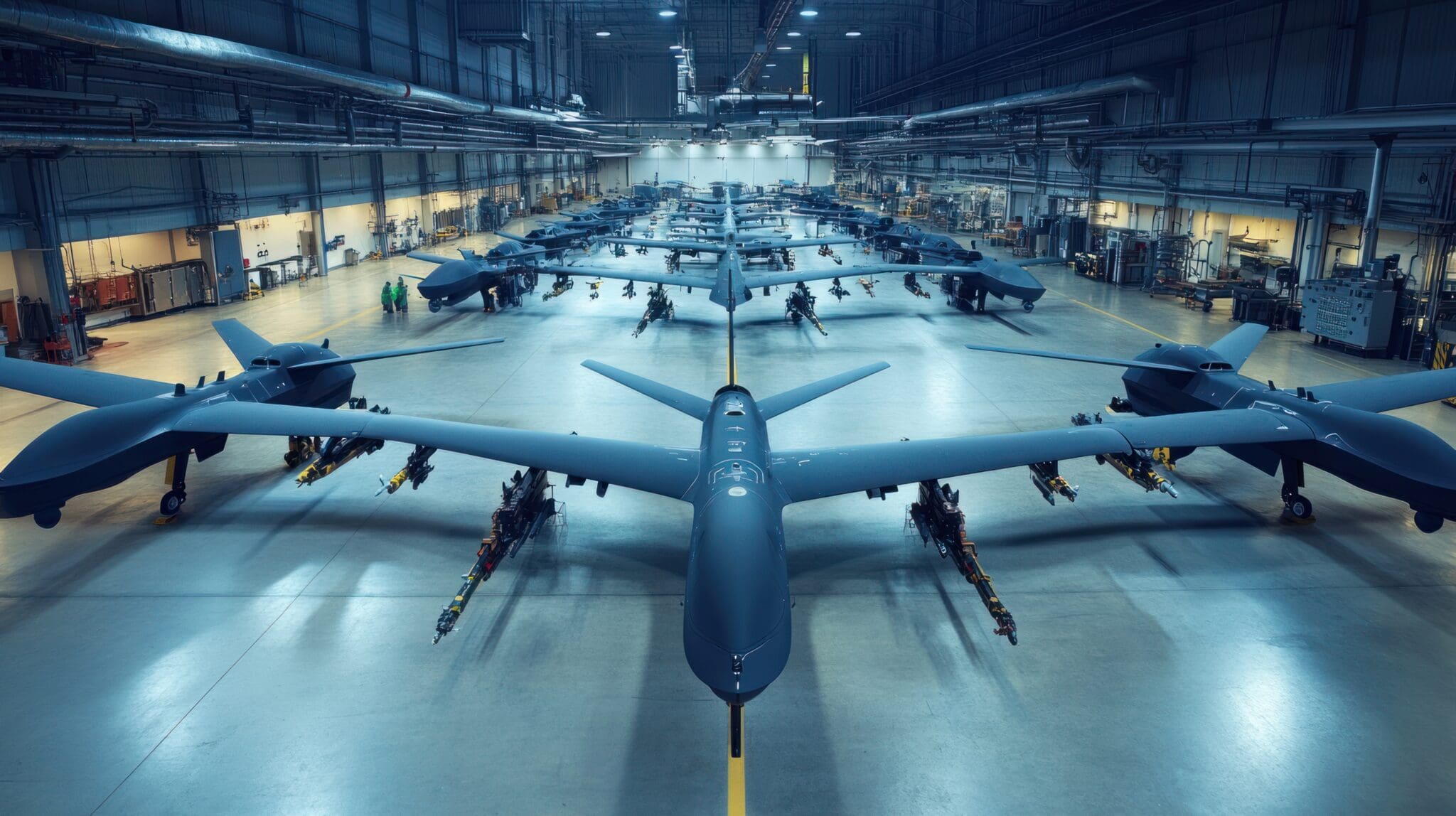
Understanding Defense Industry
Industry is, to me, one of the most fascinating topics related to defense. Like everything, it must be assessed in context of whatever the national objectives and challenges are, but the topic also stands alone. Both defense-related political and business decisions can be made simply from an industrial perspective.
Strip away national objectives, international relations, and armed forces; what you are left with are the industries that give you the means by which to fight that war; be it in terms of heavy industry, rockets, satellites, fuel, information, or every piece of clothing, each battery, blog, bullet, and ball-bearing, in-between.
It is the limitations of industry that largely define the scope of your warfighting options. Historically, annual commitment to national defense budgets could, to varying degrees, guarantee the sustainment of specialized defense industries identified as critical to national defense. But most industry has a duality; a crossover of capabilities that support commercial requirements that are adjusted to accommodate defense demand as necessary. So, the broader the domestic industrial capabilities, the broader the warfighting options.
Beyond perhaps the obvious issue of domestic industrial scope and capacity is the issue of industrial management.
- To what degree is responsibility driven by merit vs. some other form of favoritism?
- Is industry competitive; in other words, are you driven to innovation, quality, and affordability by the threat of losing business?
- To what degree is management decision-making subject to undue influence; is the process ethical?
- Are staff recruited and promoted based on the same standards of merit, performance, ethics?
Russia’s invasion of Ukraine has revealed an exceptionally overrated traditional heavy defense industry that is compromised with respect to innovation, manufacturing capability, quality control, and one that is devoid of ethical management.
Concurrent to the dismal Russian revelation has been the rapid evolution of defense industry within China. China appears to have applied much that it has learned from the West over the past few decades to develop innovative and capable domestic defense industry-oriented design and manufacturing processes – although there may be some very critical shortcomings. More to follow….
Although there is a tendency for most analysis to focus on the more apparently capable nations, ones with far narrower capabilities are often forced into alliances and/or the adoption of limited capabilities that they can apply in an asymmetric fashion to impact conflict in their favor.
Hamas may prove to be an impressive example of this. With effectively no industrial capability, they have managed to create a powerful information/propaganda dialog that has proven to have a dramatic global impact. To be fair, it is not all about real-time information; in fact, it may prove to be in spite of the quality of real-time information. It is largely due to wider politics and alignments that are not industry related. By generating the kind of information content that the political allies need to enable the growth of apparent global support via social media and other largely unregulated information channels that are simply open to exploitation by whomever chooses to invest most heavily in getting apparently diverse sources of content into them. The key to winning information warfare is, like nearly everything, allocation of resources.
Provocatively, it is interesting to recognize that depending on your perspective, you will either want a system that helps identify truthful information or you will prefer one that can be manipulated to support a perspective regardless of the quality of the information. More to follow….