How Does Venezuela Fit Into the Ukraine/Taiwan Equation?
Trump, Europe, and the Shifting Balance of Global Power
Many in Washington and across Europe see a historic opportunity: to decisively, and at relatively little cost, check an expansionist Russia whose military has been revealed as brittle and whose ambitions are rooted in nostalgia for the Soviet empire. Yet US President Trump has appeared, at best, apathetic to this opportunity and, at worst, sympathetic to Russian President Vladimir Putin, a master political tactician who continues to outmaneuver him on the global stage.
Still, American leadership is more than the personality of one president. The machinery of government grinds on, powered by experts who manage the nation’s sprawling strategic responsibilities. Which raises the real question: what larger maneuver is underway, and where is it headed?
Europe’s Moment of Reckoning
For decades, U.S. contributions to NATO have dwarfed those of its European allies. Trump has been blunt about this imbalance, and he is not wrong: Europe has the wealth, the industrial capacity, and, most importantly, the need to invest far more aggressively in its own defense. Russia’s disastrous invasion of Ukraine has exposed the hollowness of Moscow’s military power. That humiliation should embolden Europe to shed its dependence on American security guarantees and step forward as a more formidable global actor.
Is Trump’s “tough love” strategy toward NATO really a way to force Europe into reclaiming its role? If so, the question now is whether Europe will rise to the occasion or continue sacrificing influence to internal experiments that distract from hard power.
The China Test
If Russia’s weakness makes it a declining threat, China is another matter entirely. Trump may seem indifferent to Ukraine, but on Taiwan he has shown resistance to any forced change in the island’s status. That matters. Unlike Russia, China has built the capacity to project and sustain military power in its near seas: the South China Sea, the East China Sea, the Yellow Sea.
But proximity is a double-edged sword. Any Chinese offensive would invite strikes on its own territory, against industrial hubs, logistics centers, and political infrastructure. What has been, until now, a low-cost expansion through uninhabited islands could quickly become a war with staggering costs.
For the United States to intervene meaningfully, however, regional allies, Japan, South Korea, the Philippines, and Taiwan itself, must demonstrate unmistakable military resolve. So far, that resolve remains more aspirational than real.
Russia Isn’t Irrelevant
Some dismiss Russia outright, pointing to its ineptitude in Ukraine. But that is a dangerously narrow view. Power is not only measured in tanks and artillery. Russia retains the ability to disrupt, to destabilize, and to enable America’s adversaries in ways that could magnify other threats. Underestimating Moscow’s ability to play spoiler would be naïve.
The Venezuelan Piece on the Chessboard
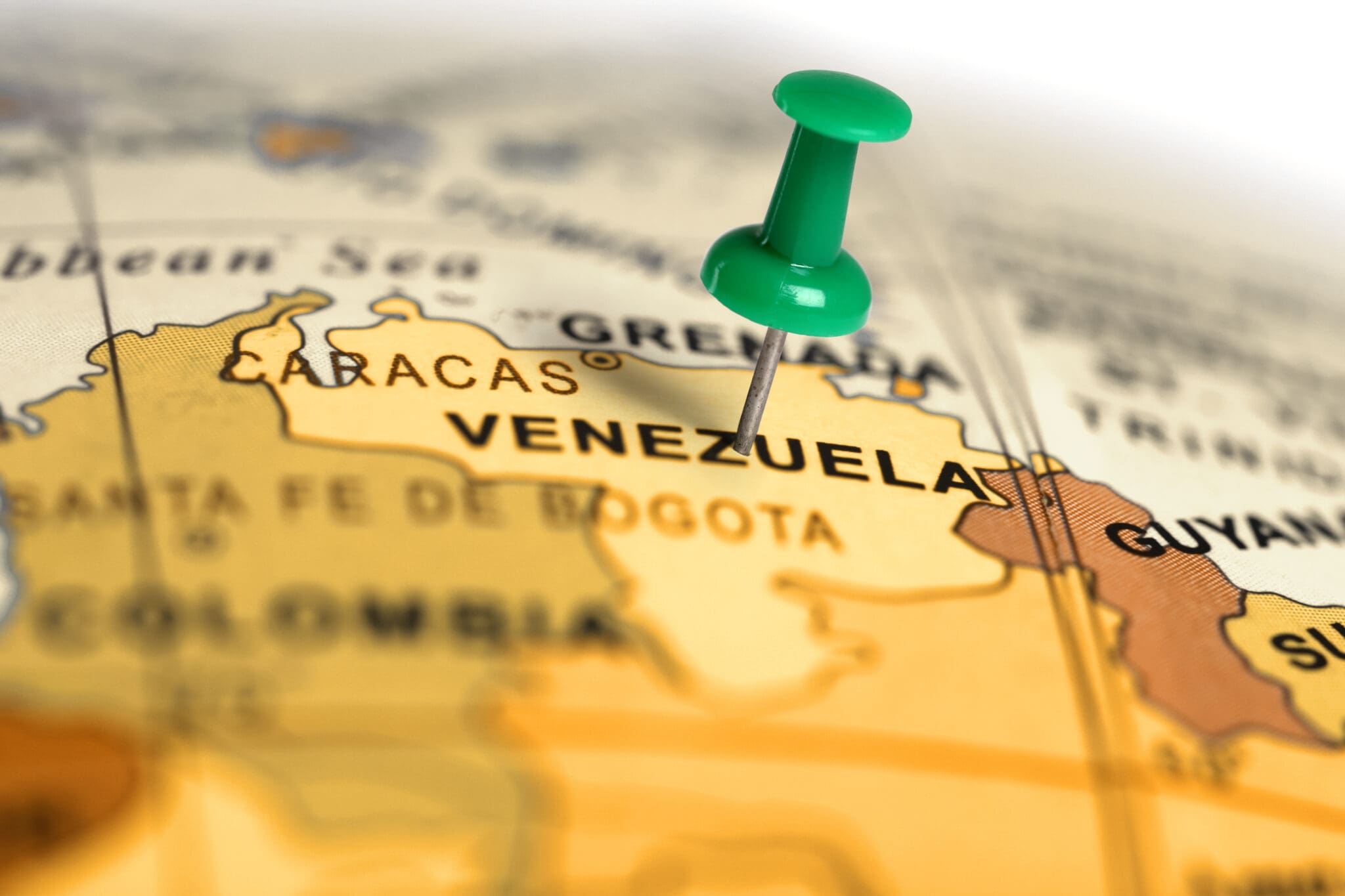
Perhaps the most overlooked development is unfolding much closer to home. The recent U.S. deployment of forces to the Caribbean and near Venezuela barely registered in American headlines, but it is strategically significant. Yes, Caracas is hostile to Washington and enables smuggling, but that is not the main issue. Venezuela holds the world’s largest proven oil reserves. That fact alone makes it a prize every major power covets.
Control or influence over Venezuelan crude could reshape global power balances:
- It could suffocate any Russian attempt at economic recovery.
- It could lock in European energy security, giving Europe room to shoulder more of its own defense burden.
- And it would hand Washington immense leverage over oil markets, forcing OPEC to adapt rather than dictate.
Most importantly, it would put China on the defensive. Deprived of diversified supply, Beijing could find itself tethered to Russian oil, barrels that have no alternative buyers.
The Strategic Gamble
This, then, may be the real story of Trump’s foreign policy. His “indifference” may be less neglect than a gamble: that by forcing allies to shoulder more of the burden, pressuring adversaries through energy leverage, and keeping China contained, America can reorder the balance of power without shouldering every cost itself.
The gamble is risky. It relies on Europe stepping up, on allies in Asia showing resolve, and on America sustaining influence over energy markets. But if it succeeds, it could reshape the global order in ways that neither Putin nor Xi ever anticipated.